DWP work capability assessment incontinence – I start off my ramblings by saying these are my experiences, they won't represent everyone. I can't and won't speak for every person who has experienced issues similar to my own. Further, I write like I speak – with equal parts passion, sarcasm, anger, and confusion.
Attending the DWP consultation – well, that is a bit of a farce…
Recently I found out the DWP (Department for Work and Pensions) were considering really big changes to the descriptors in the Limited Capability for work related activity (LCWCA).
You think this would have been big news? That the consultation would have been promoted widely to advocacy and disability support groups, and to all people who currently receive or are waiting to be assessed for this benefit? Nope, it was hidden away in the middle of a huge wordy online document, which you can see here. The full consultation closed on 30th October 2023. The only way you could contribute or give feedback was online.
I was fortunate enough to see the link, so I went along to their online continence consultation event to give my opinion and feedback on their proposed changes. In total there were 10 attendees: seven DWP staff, two people who experience continence difficulties, and one representative from a welfare advice service. That speaks volumes to me about how widely promoted this consultation was. There were only two people who attended who were affected by continence issues. Two.
My concern is that changes will move forward that affect thousands of people, without proper meaningful consultation. Continence is hard for people to talk about – it’s a taboo subject. People are embarrassed to discuss their bladder or bowel habits with their own doctors, never mind in a meeting with the DWP. Those in attendance were very much against the proposals, but we were only two voices, so I hope we were able to articulate the difficulties this condition brings.
The reality of incontinence and employment
I have bowel incontinence, a parting gift from bowel surgery for my Crohn’s disease in 2022. I’ve also been diagnosed with ME/CFS, another gift from years of immunosuppression and infection. Prior to this I was able to work in a “typical” job – I travelled to work, worked in an office, and did a lot of outreach in my local community. I took great joy in going to the local games area to support kids setting up grassroots football. But incontinence changes all this. I can no longer travel with the freedom I used to, I can’t walk for long periods, I need a workplace with toilet facilities, and that means I can no longer do outreach work. I also can’t do any type of office‑based lone working.
How exactly would you expect people to prove this?
- Do I need my GP to write them a letter? Do I have to pay for this, or will they? Doesn’t my GP have better things to do?
- Do I need to visit a bowel specialist – when there is at least a 9‑month waiting list?
- Do I need to pour my heart out about my toilet habits to a complete stranger in a DWP assessment? “Sing for my supper” cap in hand, just to prove I’m eligible?
According to the DWP’s planned changes to continence – I just need to pop on a nappy and get back to work! Or that’s what it feels like. What the DWP don’t seem to recognise is how hard that will be. I’ll give a few examples.
The right loo!
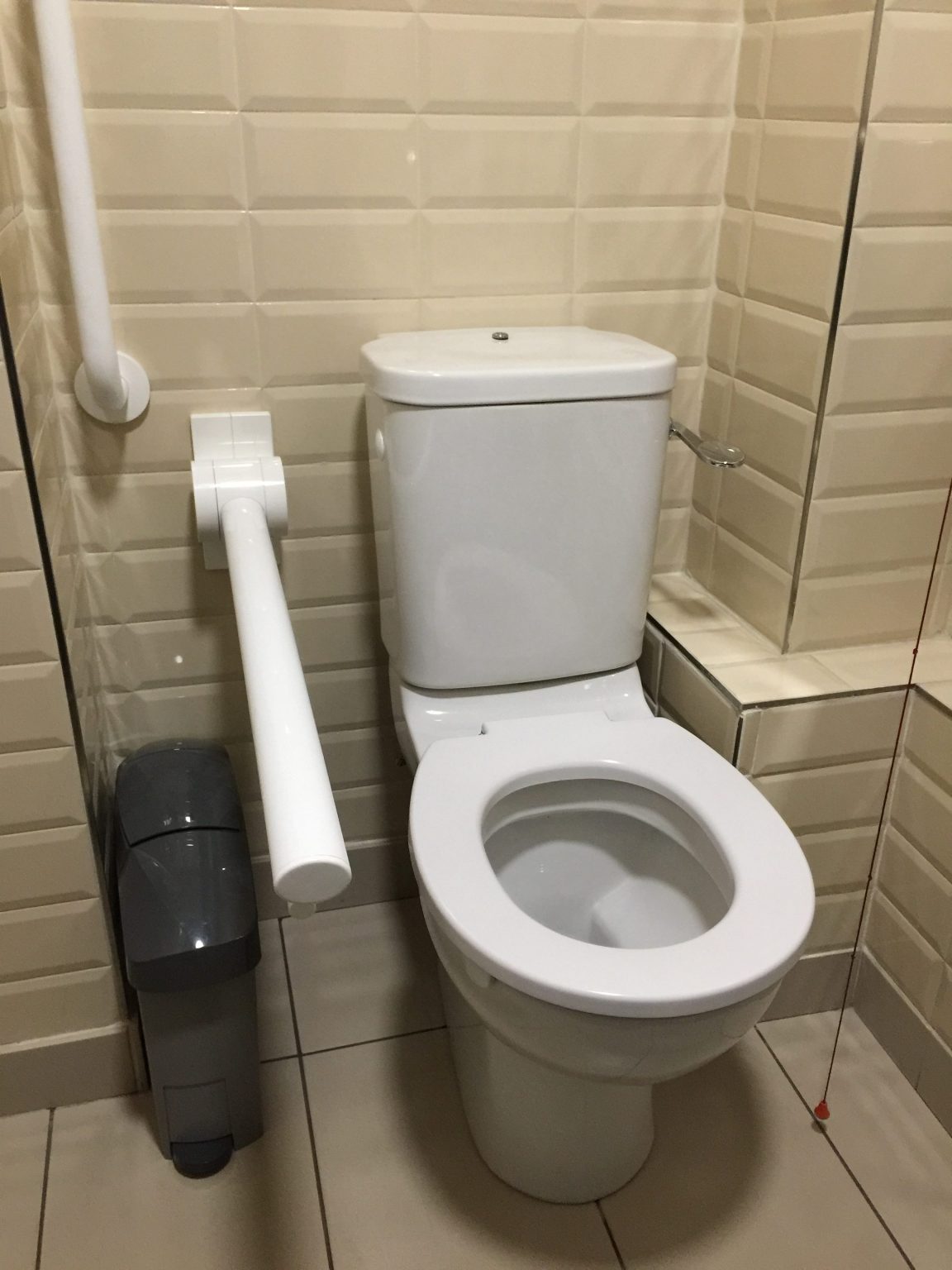
I need an accessible toilet. Not all workplaces have one. If they do have one, it’s usually used to store the hoover, mop and stack of printer paper. I don’t want to have to change incontinence products in a stall next to someone else – it smells, it’s messy, it’s noisy, and it’s degrading. I need an appropriate hygiene bin to dispose of products; these can usually only be found in accessible toilets (and even then, in my experience, these bins are only there 50% of the time). I need private handwashing facilities and the space to change my clothes if needed. And if it all goes wrong, I’ll probably need to go home.
The right job!
I have a lot of experience and skills to give to an employer. I miss working, and I would love to return to work. The DWP say that since the pandemic, more people can now work from home, meaning disabled people now have more opportunities to return to work.
A home working job in the North East? As I pointed out in the consultation, true home working jobs are few and far between…
What I realised is that if the job has the words ‘home’ and ‘work’ in the title or description, it’s being highlighted as a ‘work from home role’. I told this to the DWP; they said I could always come in to the jobcentre. But I can’t – because my local job centre doesn’t have an accessible toilet.
Welfare support is there for a reason.
I refuse to be vilified for accessing the welfare support I’m entitled to – it’s there for a reason. To protect all of us and be a safety net in times when we are unable to work. Will there be people who abuse it? Yes, but that will be a very small minority, as opposed to the vast majority it helps. But according to the DWP (or the current government), it’s as if I’m somehow sat here on my [porcelain] throne surrounded by piles of money, thinking up ways to defraud the Great British public! I’m just a ranty northerner who wants to work, but can’t because I have the unfortunate issue of crapping myself in public and falling over when I get too tired.
Incontinence, for me, is not the barrier to work – so what is?
Incontinence is just one effect of my condition, but if I’m brutally honest, it isn’t the barrier to finding a job. The real barriers are: lack of accessible transport options, lack of accessible toilet facilities, lack of accessible buildings, lack of age‑appropriate incontinence products, and lack of meaningful workplace adjustments. These barriers are all fixable in one way or another, and that’s where our attention should be focused. Not on how broken the person is – but on how broken the world is and how, in 2023, we should have more employment options for disabled people than just ‘working from home’.
But at least I still have my sarcasm and sparkling wit, so if anyone wants to offer me a job (must have accessible loo and flexible working policy), send me a message.
Claire is a Difference North East Member