Tees Valley Community Voices • Darlington, May 2025
Voices from Darlington
An honest conversation on disability, access and community from the heart of the Tees Valley
Published 23 May 2025 • 9 min read
Two Hours Discussion with Darlington Members. A Lot That Needed Saying.
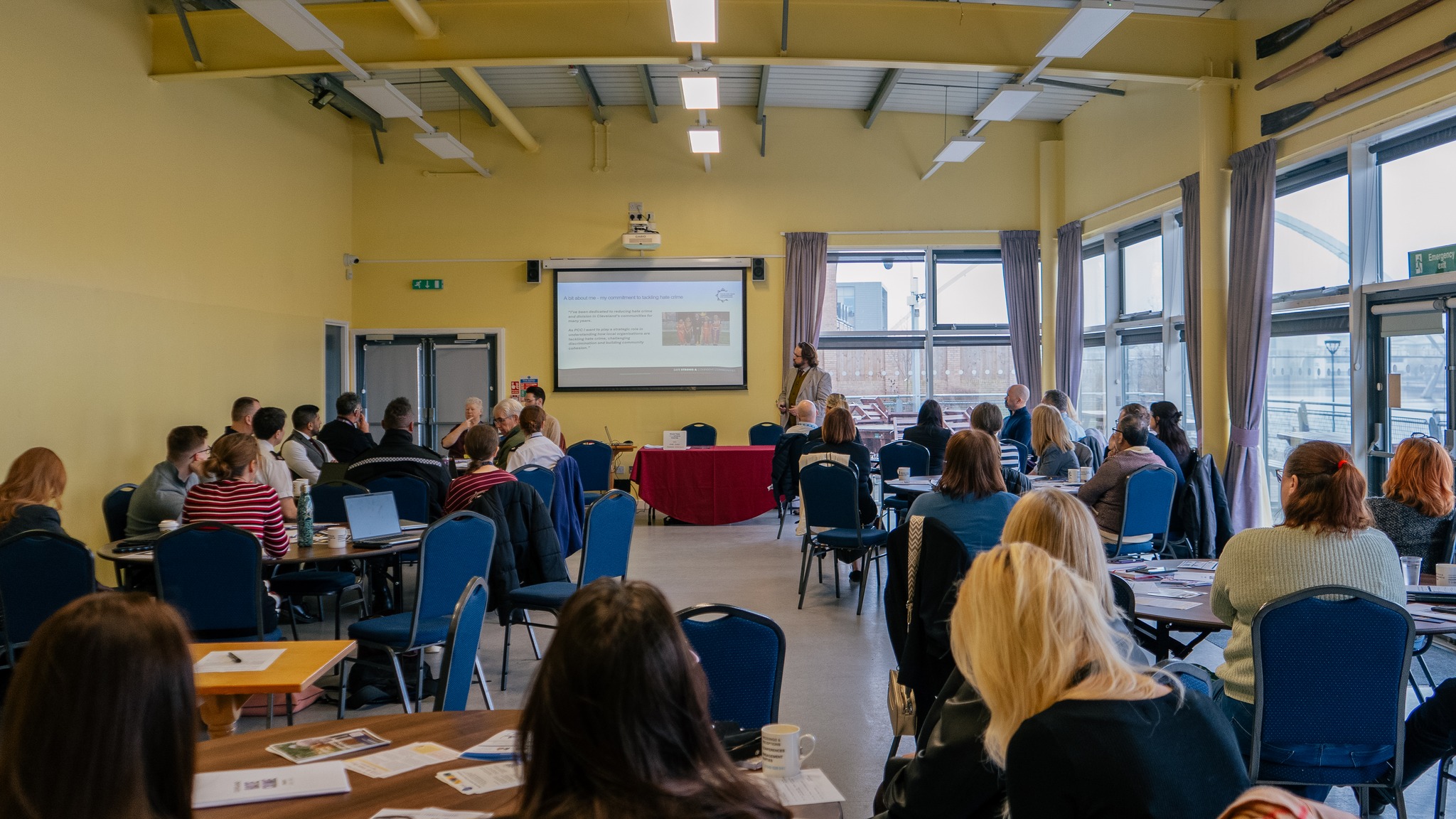
On a Friday morning in May 2025, difference members sat down in Darlington. What followed was nearly two hours of conversation that covered taxis and cobbles, PIP forms and parenting courses, ADHD medication bureaucracy and the quiet, grinding cost of simply being disabled in the Tees Valley.
The session was part of a wider series of community discussions taking place across Teesside, Hartlepool, Stockton and the North East, gathering disabled people's voices. But the conversation quickly became something bigger than a consultation exercise. It became a frank reckoning with what life actually looks like when the systems that are supposed to help you are designed, it often feels, to make you give up.
What emerges from their words is not despair though there is frustration in abundance but a clear-eyed vision of what Darlington and the Tees Valley could be. The participants were precise about the problems and precise about the solutions. Both deserve to be heard.
Key Themes
Transport & Access
Taxis that refuse mobility aids, buses that skip ramps, cobbled streets that go nowhere getting around Darlington remains a daily battle.
Bureaucracy & Benefits
PIP cuts, Access to Work paperwork, phantom debt letters the system piles complexity onto people who already have the least capacity to deal with it.
SEND & Parent Carers
EHCPs ignored, diagnoses delayed, children in crisis before help arrives and parents left to fight every battle alone while holding everything else together.
Community & Voice
The same call arose here as at every session: a peer-led, by-us-for-us community in Darlington that holds its own power and can't be co-opted.
Getting Around Darlington: Still an Obstacle Course
Transport was where the conversation started, and it quickly became clear why. For disabled people in Darlington and across the Tees Valley, the simple act of getting from A to B is layered with negotiation, humiliation and risk.
One participant described waiting 45 minutes in the cold for a taxi after calling ahead, only to be told by the driver that the car had been there half an hour. When you are not well enough to drive, waiting outside in the cold might not a minor inconvenience. It is a health event in its own right.
Another arrived at the session without her rollator a walking frame she should have been using because a taxi driver had refused to take it to Hartlepool days earlier, claiming the boot was too small. She made a quiet calculation on the day of the Darlington event: bring the rollator and risk another confrontation, or leave it at home and manage with a stick.
"In my heart, I know I shouldn't care what they think. That's my own internal ableism, I shouldn't care, because I need that taxi." Difference North east member, Darlington
That moment of self-awareness recognising the internalised shame that comes from years of being made to feel like an inconvenience was one of the most honest of the session. She knew she was entitled to use a wheelchair-accessible taxi to transport her rollator. She knew the embarrassment she felt was not her fault. She felt it anyway.
Arriva Buses & the Ramp Problem
Bus access across Darlington and Teesside generated its own set of stories. There have been long-running reports, including in the Northern Echo, of Arriva drivers refusing to deploy ramps for wheelchair users or declining to ask pram users to move. One participant described her young adult son being taken two stops past his destination because the driver who had already made a scene about the wheelchair and pram access drove the route like "Formula One around the estate."
Ramps are also routinely withheld from people using rollators, on the logic that they can "just step up." As one participant explained, that misses the entire point: rollators exist because people need them to balance. Lifting the wheels to mount a step removes the very stability the frame is designed to provide.
Darlington Town Centre: Aesthetics vs. Access
The town centre itself presents its own challenges. The historic cobbled streets around Darlington market town are understandable they are old, and there is only so much that can be done. What frustrated participants more was unnecessary cobbling in newer developments like Teesside University, where stone sets have been laid purely for aesthetic effect, creating hazards that serve no historical purpose.
High street shops present a further problem: steps up to entrances, pavements too narrow for portable ramps, and an informal workaround that most disabled people know all too well.
"I normally find that if I stick my head around the door and 'woo hoo' they'll deal with me in the door… But if you're having to stick your head around the door of a bank and do your bank details in the doorway, it's not very confidential." Difference North east member, Darlington
Bureaucracy as a Barrier: The Hidden Disability Tax
If transport is the most visible barrier facing disabled people in Darlington, bureaucracy may be the most corrosive. Participants described lives that are structured around form-filling, chasing, re-explaining, and re-proving their own circumstances to systems that already hold all the relevant information.
One participant who has a degree and works with disabled people professionally described Access to Work's travel claims process in detail: calculating her own contribution, calculating her employer's contribution, finding paper forms and printing them at the library because she doesn't always have ink, getting them scanned and signed by her manager, and then waiting months to be reimbursed. A single taxi from her home to Darlington costs around £20. After months of this, she has claimed nothing, and her employer has absorbed the costs instead.
"I personally think that they make the Access to Work paperwork as difficult as they can to stop you from applying for it, even if you have a budget… I have a degree, and I physically can't deal with it." Difference North east member, Darlington
The £3,000 Letter That Was Never Owed
Another participant described receiving a letter from her local authority informing her that she owed £3,000 a backdated care contribution following her move from Working Tax Credits to Universal Credit. She was certain the debt was wrong. She spent months gathering evidence: receipts for therapy, heating bills, the cost of a lightweight walker not available on the NHS, disability-related clothing costs. She submitted formal rationale. She chased repeatedly. She was told she needed her social worker to sign off on personal expenses. She objected. She wrote more letters.
In the week she received that initial bill, she could not sleep. The stress made her physically ill.
Then, the week after she submitted an official complaint, a letter arrived: she owed nothing. She had never owed anything.
"When I got that three grand bill, I couldn't sleep for a week. I was so poorly for nothing." Difference North east member, Darlington
The same participant also described a hospital dental appointment at which she was told she could not be the "responsible adult" for her daughter's general anaesthetic because she uses a wheelchair. She has raised that daughter alone.
The Real Cost of Disability
One of the most quietly powerful parts of the session was a frank discussion about the financial reality of being disabled. Participants described costs that the public and the government routinely overlook: continence products not provided by the NHS; specialist clothing because standard cuts are painful or impractical in a wheelchair; a health-monitoring app at £25 a month that predicts fatigue episodes hours in advance and makes work possible; the cumulative cost of every extra taxi, every private therapy session, every piece of equipment the system won't fund.
"This costs a lot of money. I have to pay for this privately, and this is what my PIP pays for… If I don't get PIP, I won't be able to manage my pain so I'll be turning up to A&E more, which costs an absolute fortune. It's just going to cost them more." Difference North east member, Darlington
PIP Cuts, DWP Spying & the Pace of Attack
The political backdrop to the session was impossible to ignore. The conversation took place against a backdrop of proposed PIP reforms, changes to SEND legislation, a forthcoming assisted dying vote, and reports of DWP surveillance of benefit claimants. Participants described a deliberate pace multiple major changes being pushed through simultaneously, faster than any campaign can adequately respond.
"Do you think they are doing it all at once on purpose? DWP spying, PIP, the SEND proposal changes, assisted dying… It's splitting the campaigns up. You have to pick one and focus on it, because you can't do all of it." Difference North east member, Darlington
Participants described a despondency that has set in across Darlington and the wider Tees Valley disability community after 14 years of austerity, followed by a change of government that has not delivered the break from cuts that many hoped for.
"Does anybody care about disabled people anymore? Because you do, but you can't help feeling that government doesn't care anymore." Difference North east member, Darlington
Online hostility was also raised. One participant described a public comment, made under a person's real name, expressing satisfaction that the Assisted Dying Bill might result in the deaths of disabled people. Another described the Northern Echo running an article about a trans woman too scared to go out in Darlington, only to allow the comments section to fill with the very abuse the article was describing. The media environment in the Tees Valley, participants argued, has a responsibility it is not currently meeting.
Participants were clear: none of this is abstract. The political climate directly shapes how disabled people in Darlington are treated by strangers, by institutions and by the healthcare system. The call to action was personal as much as political look after each other, protect the community, and do not let the volume of attacks prevent a focused response.
ADHD Medication in Teesside: A System Designed to Fail
Few sections of the conversation better illustrated the gap between policy intention and lived reality than the discussion around ADHD medication access. In Stockton, the ADHD prescribing service closes at 4:30 or 5pm and will not enter into shared care agreements with GPs, on the grounds that the medication is a controlled drug. Yet the same medication can legally be collected by a family member from any pharmacy. The inconsistency baffled participants.
"People who have ADHD also work. Surprisingly. But they took to half past four… If I can pick it up, why can't they send it to his doctor? Why can't someone pick it up from a weekend pharmacy? It can't be that controlled." Difference North east member, Darlington
In Child and Adolescent Mental Health Services (CAMHS), the situation is even more labyrinthine. Prescriptions are sent to a chemist of the patient's choice but only via a volunteer driver who works on Tuesdays. If the psychiatrist hasn't signed the prescription before Tuesday, the family waits until the following week. Then the chemist takes two more days. And if the pharmacy doesn't stock the specific medication, the process starts again.
Meanwhile, the same controlled drugs are routinely handed out to other patients at GP surgeries with nothing more than a signature. The asymmetry is not about safety. It is, as one participant put it, "bureaucracy based on assumption."
SEND in Darlington: The System That Makes You Fight for Everything
The session included some of its most raw and important moments when participants talked about navigating the SEND system as parent carers in Darlington and the wider Tees Valley. Across the table, two parents shared years of experience that followed strikingly similar patterns: early signs ignored or dismissed, crisis as the trigger for action, then a diagnosis handed over with nothing attached to it.
"You get the diagnosis. And then we went what support is there? Not much. Not much at all." Difference North east member, Darlington
One parent described a young person who had been masking their autism effectively throughout primary school. Teachers said there was "nothing to suggest" anything was wrong, even as the parent raised concerns consistently. The young person started secondary school and immediately struggled. In their second year, they attempted to take their own life rather than return. Only then was a referral for autism assessment made.
"That was absolutely horrific to watch your daughter go through that… And then, only then, was she put forward for an autism diagnosis." Difference North east member, Darlington
The same young person has since been diagnosed with a serious heart condition a valve that did not close fully at birth, discovered after post-COVID symptoms were investigated. A major operation has been indicated for two years. Every time an appointment is scheduled, it is moved. At the time of the session, the next date had been pushed to March of the following year.
Another parent described their young adult child's Education, Health and Care Plan (EHCP) specifying three hours of one-to-one tuition per week. The school said they lacked the staff. The council said to challenge the EHCP. The family pushed, and eventually secured tuition at a local provider but when the young person's mobility changed and they could no longer manage the stairs, the venue became inaccessible and no alternative was found.
On whether schools know what they are doing when it comes to neurodivergent young people: "You think, well, they must have experienced this before. They must know what they're doing. But they fucking don't." That was said not in anger alone, but in the exhausted recognition of a parent who spent years deferring to institutional authority that had no answers while their child suffered for it. These are the real consequences of underfunded, under-trained SEND provision in Darlington and across the Tees Valley.
The Parenting Course Insult
Both parents had been directed to parenting courses at various points a common experience that landed, for them, as an accusation rather than support. One had other children with no difficulties whatsoever. The message being sent by the system was clear and wrong: the problem is you, not the school, not the lack of diagnosis, not the environment that doesn't work for your child.
"If you're a parent who's not in a good space and your child is really struggling and you go, and they say, you need to go on a parenting course that is going to be like a dagger to your heart." Difference North east member, Darlington
Local Contracts, Legal Aid & the Preston Model
Some of the session's most forward-looking discussion centred on structural change: how Darlington, the Tees Valley Combined Authority, and local commissioners could build something that actually works.
Keep Contracts Local
Participants argued that the Tees Valley Combined Authority and local councils should mandate a minimum percentage of disability-related contracts to go to organisations based in the area. The case was made with precision: local organisations carry local knowledge, local sign dialects in the Deaf community, local relationships, and genuine accountability to the people they serve. When contracts go to national providers, that all disappears and the money leaves the area.
The Preston Model was raised as a parallel: a city that has deliberately redirected its public procurement toward local businesses and credit unions, keeping wealth circulating within the community. Why couldn't the Tees Valley do the same for disability services?
Legal Aid for Disabled People in the North East
A recurring frustration was the impossibility of enforcing legal rights without legal support. EHCPs are legally binding documents but schools know that families rarely have the capacity or resources to take them to tribunal. The Equality Act gives disabled people rights in public spaces but without legal aid, those rights exist only on paper.
"If we had some kind of North East legal aid that was free for local families if we could get local solicitors to club together in a bit of corporate social responsibility then we could challenge these things and set a precedent. Because they know we can't challenge it. So they know they can get away with it." Difference North east member, Darlington
The Reasonable Adjustment Flag
One genuinely positive development was flagged: the NHS Reasonable Adjustment Flag, mandated to be implemented across all health and social care systems by 31 December 2025. For the first time, a disabled person's adjustment needs their communication requirements, mobility needs, and accessibility information will be required to travel with them across every part of the system, from GP to hospital to social care, without needing to be re-explained at every appointment. Participants were cautiously hopeful, while noting that many hospital staff had not yet heard of it.
What good local services look like: When asked which local organisations were working well, D.A.D (Darlington Association on Disability) received consistent, positive mentions across the session. Small, peer-led and locally rooted, it was held up as the model for what Darlington needs more of.
Building a Community That's By Us, For Us
The session ended where every session in this series has ended with the same unmet need articulated clearly and without embarrassment: a peer-led, disabled-people-run community space in Darlington and the Tees Valley that exists for its own members first, and can't be co-opted by external organisations chasing its voice for their funding bids.
"What people keep saying is, I wish there was a group like this where we get together, where there's no pressure, there's an agenda that's about us, what we want, but it protects us as well. It isn't external organisations. Sometimes I worry it's external organisations coming in to be noisy." CA, session facilitator, Darlington
Participants looked to Manchester's coalitions of peer-led disability groups as a model organisations that come together to share knowledge, support PIP applications collectively, and act as a single, powerful community voice. That kind of infrastructure, they argued, exists in larger cities and is largely absent in Darlington and across the Tees Valley right now. It used to exist in pockets. It needs rebuilding.
"We all know little bits about everything, and we are the experts by experience. What we're missing is an opportunity for a collective a community that is by us, for us. We need to take that power back." Difference North east member, Darlington
What this community would do, in practice: answer questions from each other. Direct the right person to the right knowledge. Offer training to services that fail disabled people, rather than accepting that failure. Build the kind of institutional trust that only comes from sustained presence, genuine accountability, and being led by the people most affected.
What Does a Good Life Look Like?
Near the session's close, participants were asked simply: what do you need to live a good life? The answers were not extravagant.
- Money enough to cover the real costs of disability without constant anxiety
- Basic human decency "kind and compassionate, it's just almost like basic human decency"
- Adjustments made without a fuss "half the time the adjustments aren't massive"
- Stop listening to media narratives that dehumanise disabled people "stop reading anything that has 'live' at the end of it"
- Systems that communicate with each other, so disabled people don't have to be the connective tissue
- A community that protects its own and doesn't wait for permission to exist
Mutual recognition and peer solidarity. Not consultation. Not charity. Not being handed over to whichever national organisation has just won the contract. Something rooted in Darlington and the Tees Valley, built by the people who live it, answerable to the community it serves. That is what these voices are working toward and what they deserve.
Get Involved in Darlington & the Tees Valley
These voices are part of an ongoing effort to build a stronger, peer-led disability community across Darlington, Stockton, Hartlepool and the wider Tees Valley. If you want to be part of it or if your organisation wants to understand what disabled people in this area actually need this is where to start.
Join to Connect with Difference members in Darlington and Teesside Share Your StoryQuotes and content drawn from the Voices from Darlington community discussion, 23 May 2025, Darlington.
All voices have been shared in line with session ground rules. Participants' identities have been anonymised. Children and young people are referred to in general terms throughout.
This article is part of a series on disability and community across Teesside, Hartlepool, Stockton, Darlington and the wider North East gathering lived experience to inform regional advocacy and funding.
Related Posts

Access to Work Parliamentary Inquiry